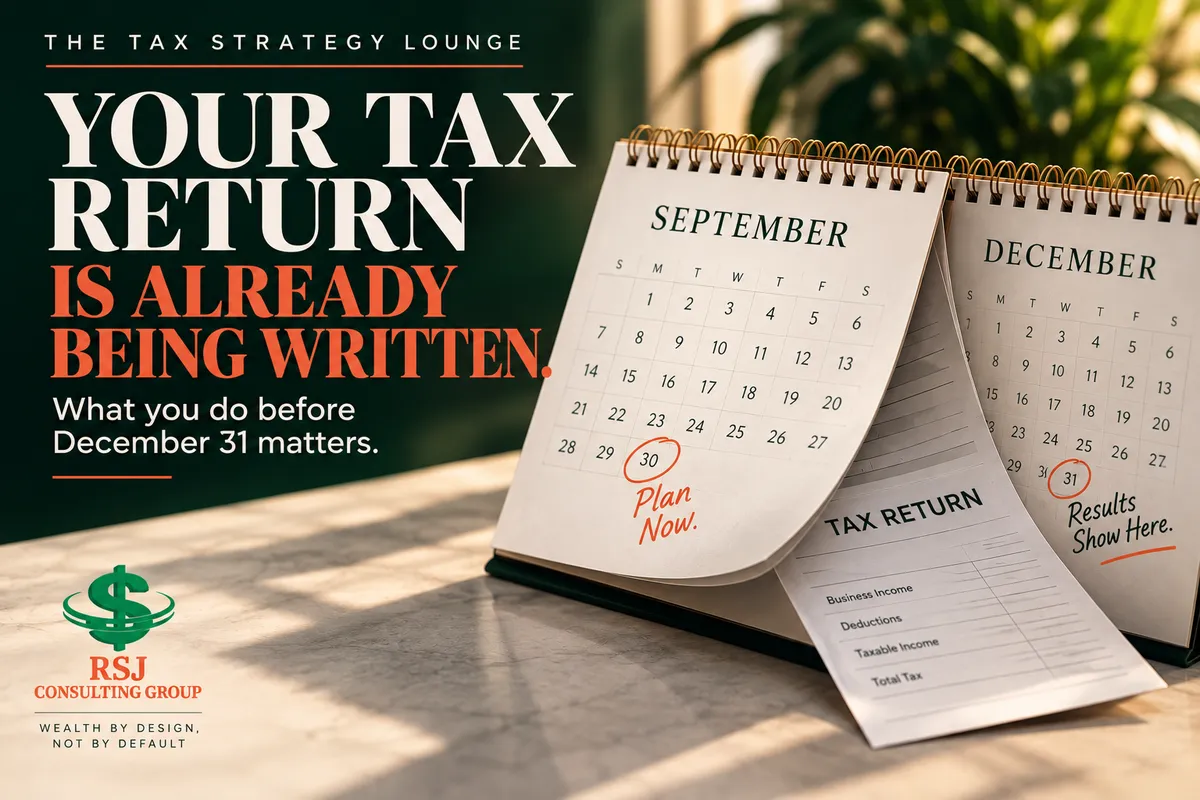
Why September Is the Perfect Time to Start Tax Planning
Why September Is the Perfect Time to Start Tax Planning
Savvy Business Owners Get Ahead by Reviewing Profit, Expenses, and Tax Strategy Before Year-End
If you own a business, tax season does not start in January.
By the time you sit down to prepare your tax return, most of the financial decisions that shaped that return have already been made. Your income has been earned, expenses have been paid, and once the tax year closes, many planning opportunities become limited or disappear altogether.
That is why September is such an important time for business owners.
At this point in the year, you have several months of real financial data to work with. You can see how much your business has earned, what you have spent, whether your profit has increased, and whether the tax plan you started the year with still makes sense.
More importantly, you still have time to do something about it.
Why September Matters
Tax planning is not about looking for deductions at the last minute. It is about understanding your financial position and making intentional decisions before the year ends.
By September, you should have enough information to begin asking questions such as:
• Is my business earning more than I expected this year?
• Have my expenses changed significantly?
• Am I setting aside enough for taxes?
• Am I making the most of the tax strategies available to me?
• Does my current business structure still make sense?
• Are there financial decisions I need to make before December 31?
Waiting until January to ask these questions can leave you with fewer options.
Start With Your Books
Before you can build an effective tax strategy, you need accurate financial information.
Start by reviewing your year-to-date profit and loss statement.
Look at your revenue. Is your business earning more or less than you anticipated?
Then look at your expenses. Make sure legitimate business expenses are being captured and properly categorized. Review items such as mileage, business technology, professional services, supplies, insurance, education, and other ordinary and necessary expenses related to operating your business.
You should also look for missing or incorrectly categorized transactions and make sure your bookkeeping is current.
Clean books do more than make tax preparation easier. They give you the information you need to make better business and tax decisions.
Review Your Estimated Tax Payments
If your income has changed during the year, your estimated tax payments may need to change too.
A business owner who based estimated payments on last year's income could potentially be underpaying if the business has grown significantly. On the other hand, someone whose income has decreased may need to reevaluate what they are paying.
This is one reason tax planning should happen throughout the year.
Your tax strategy should reflect what is happening in your business now—not simply what happened last year.
Don't Wait Until Tax Season to Think About Deductions
One of the biggest mistakes I see business owners make is waiting until tax preparation to start asking:
"What can I write off?"
By then, the better question may be: "What opportunities did I have before December 31?"
Depending on your circumstances, year-end planning could include reviewing business expenses, retirement contributions, equipment or technology needs, charitable giving, employee benefits, accountable plan reimbursements, or other strategies available under the tax law.
But spending money simply to create a deduction is not automatically good tax planning.
A tax deduction generally reduces taxable income; it does not make the purchase free. The decision should make sense for your business first and fit within your overall tax strategy.
That is the difference between chasing deductions and actually planning.
Tax Preparation and Tax Planning Are Not the Same Thing
These terms are often used interchangeably, but they serve two very different purposes.
Tax preparation looks backward.
It takes the financial activity that has already occurred and reports it on your tax return.
Tax planning looks forward.
It examines where you are financially, where you expect to finish the year, and what legitimate strategies may be available before certain opportunities expire.
I often explain it this way:
Tax preparation tells you what happened. Tax strategy helps you plan what happens next.
Both are important, but filing an accurate return is not the same thing as proactively managing your tax position.
Look Beyond Individual Deductions
Good tax planning should not be a random list of write-offs.
Your business structure, compensation, retirement strategy, investments, cash flow, and long-term financial goals can all affect one another.
For example, as a business grows, there may come a point when it makes sense to review whether its current entity structure is still appropriate. A retirement strategy may also create an opportunity to build long-term wealth while potentially providing tax advantages. The right approach depends on the individual business owner's income, goals, entity type, and overall financial situation.
This is why tax decisions should not be made in isolation.
Your business decisions affect your taxes. Your taxes affect how much capital you have available to save and invest. And what you do with that capital affects your ability to build wealth.
What Should Business Owners Do in September?
You don't have to implement every possible tax strategy before the end of the month. September is about getting clear on where you stand and determining what needs attention before the year closes.
Start with these five steps:
1. Get your bookkeeping current.
Make sure your income and expenses are accurately recorded.
2. Review your year-to-date profit.
Compare your actual results with what you expected at the beginning of the year.
3. Review your estimated tax payments.
Determine whether your current payments still align with your projected income and tax situation.
4. Identify potential planning opportunities.
Review deductions, retirement planning, business structure, reimbursements, investments, and other strategies that may apply to your situation.
5. Create a year-end action plan.
Determine what needs to happen—and when—before December 31.
The goal isn't to make random financial moves because the year is ending. The goal is to make informed decisions while you still have time to make them.
Tax Planning Isn't Just for Large Businesses
There is a common misconception that sophisticated tax planning is something only wealthy individuals or large corporations need.
Small business owners can benefit from proactive planning too.
As your income increases, your financial decisions become more interconnected. The way you operate your business, pay yourself, save for retirement, reimburse expenses, purchase assets, and invest can all have tax consequences.
Understanding those relationships allows you to make decisions based on the bigger picture rather than simply asking how much you owe when the return is due.
The RSJ Approach
At RSJ Consulting Group, we believe building wealth requires more than earning more money. It requires understanding how your taxes, business decisions, and long-term financial goals work together.
Tax strategy helps you make proactive decisions about how you earn, structure, and keep more of your money. Business strategy helps ensure the decisions you make today support where you want your business to go tomorrow. Wealth building is where those strategies come together—turning income into assets, opportunities, and long-term financial growth.
Our approach is simple: stop making financial decisions in isolation.
Your business affects your taxes. Your taxes affect how much money you have available to invest. And the decisions you make with that money ultimately affect your ability to build wealth.
That is what it means to build wealth by design, not by default.
Don't Wait for January
September gives business owners something January cannot: time.
Time to review.
Time to identify problems.
Time to consider opportunities.
And, when appropriate, time to implement strategies before the tax year closes.
Tax season shouldn't be the first time you discover what happened financially during the year.
If you want to know where you stand and identify potential tax-planning opportunities before year-end, a Strategy Design Assessment with RSJ Consulting Group is the place to start.
Build Wealth by Design, Not by Default.
This article is for educational purposes only and does not constitute individualized tax, legal, or investment advice. Tax strategies and deadlines depend on your specific circumstances. Consult the appropriate qualified professional before implementing a strategy.